SOCI 325: Sociology of Science

Agenda

AI, knowledge,
& social data

  1. AI from a technosocial
    persepective
  2. Group discussions

Defining AI

Flowchart with the header 'TECH THAT PEOPLE CALL “ARTIFICIAL INTELLIGENCE”'. Highlighted at the end of the chart are generative AIs like DALL-E and ChatGPT. Image credited to Aspen Digital and Aspen Institute.

Technosocial AI

AI as invaluable helper?

OR

AI as tool of oppression?

Cartoon frame from the Jetsons depicting a robot (Rosie) following a man (George) who is eating a sandwich. The robot is sweeping up crumbs the man drops as he walks. Still from The Matrix movies, showing multiple identical copies of a menacing looking man dressed in a sharp suite and dark glasses (Mr. Smith)

AI is “expected to mimic, augment, or displace human agency” (Joyce et al 2021, 2)

AI supply chain

1. Theory

Flattening social data and problems

A person siloutted against a whiteboard covered in differential equations

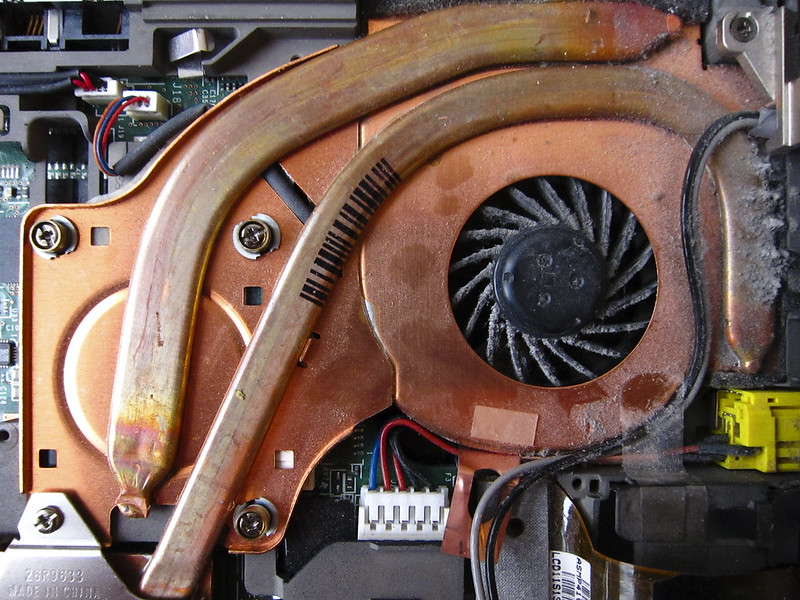
An old, dusty GPU with lots of copper.

2. Implementation

Capitalist and state-sanctioned framework

3. Uses

Policing, surveillance, deepfakes (but also disaster management, accessibility, etc.)
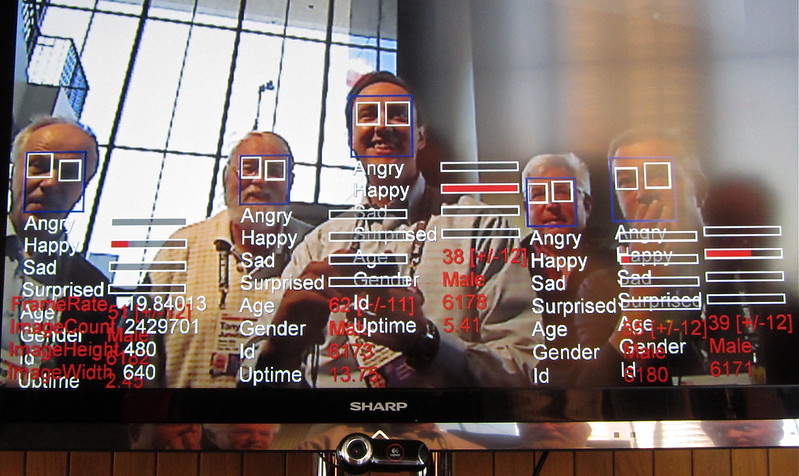
A group of people looking at the camera with squares on their faces and AI-guessed emotions floating next to each face.

Photo of people on a train holding their phones

4. Culture

The output from AI is targeted at and consumed by everyone

AI supply chain

  1. Theory
  2. Implem-
    entation
  3. Uses
  4. Culture

The technosocial in AI theory

  • Social factors influence the kinds of questions that get asked, and what constitutes an ‘appropriate’ answer
    (Martin 1991; Callon 1984; Kuhn 1970)
  • Present in data representations, objective functions, analysis of outcome, etc.
    (Sismondo 2009, Ch 6; Amann & Knorr Cetina 1988; Gould 1981)
  • “Rendering the world technical”
    Tania Murray Li & Samantha Breslin
Lego minifigures sorted into small plastic bins, each with a label behind it

AI supply chain

  1. Theory
  2. Implem-
    entation
  3. Uses
  4. Culture

The technosocial in AI implementation

  • Data and evidence are not ‘neutral’
    (Gould 1981; Amann and Knorr Cetina 1988)
  • Political, institutional, and economic forces favor the interests of powerful players (DeepMind, OpenAI, etc)
    (Sismondo 2009, Ch 17; Wolfe 2018)
  • The training, testing, and provision of AI tools requires extensive (and usually exploitative) human labor
    (Roberts 2020)
Photo of Peter Thiel holding up a wad of $100 bills

AI supply chain

  1. Theory
  2. Implem-
    entation
  3. Uses
  4. Culture

The technosocial in AI uses

  • AI and ML are used in healthcare, policing, marketing, sentencing, profiling, content moderation, …
  • The uses of AI are very flexible, but tend to be used more effectively by those in power
    (Adams 2002)
  • AI may be especially compatible with oppressive structures
    (Winner 1980)
Still from the film RoboCop (1987) showing the titular cyborg in a technical-looking chair with a man in an expensive suit leaning over him.

AI supply chain

  1. Theory
  2. Implem-
    entation
  3. Uses
  4. Culture

The technosocial in AI’s downstream consequences

  • AI is playing an increasingly central role in everyday life (social media, news articles, navigation, …)
  • Lay people incorporate strategies and knowledge into their interactions with AI (e.g. curation)
    (Callon 1984)
  • Culture is increasingly performed by AI through bots, algorithmic curation, and creative output
    (Benjamin 2019; Joyce et al. 2021)
Animation from the movie Wall-E showing two robots nuzzling in a loop. With each iteration the video quality degrades noticeably

Next class

Local knowledge

  • Allen (2018)
    Strongly Participatory Science and Knowledge Justice in an Environmentally Contested Region

Image credit

Flowchart with the header 'TECH THAT PEOPLE CALL “ARTIFICIAL INTELLIGENCE”'. Highlighted at the end of the chart are generative AIs like DALL-E and ChatGPT. Image credited to Aspen Digital and Aspen Institute.

Figure from The Aspen Institute’s Intro to Generative A.I.

Cartoon frame from the Jetsons depicting a robot (Rosie) following a man (George) who is eating a sandwich. The robot is sweeping up crumbs the man drops as he walks.

Still from The Jetsons (1962)

An old, dusty GPU with lots of copper.

Photo by Timo Kuusela on Flickr

A group of people looking at the camera with squares on their faces and AI-guessed emotions floating next to each face.

Photo by Steve Jurvetson on Flickr

Photo of people on a train holding their phones

Photo by ROBIN WORRALL on Unsplash

Lego minifigures sorted into small plastic bins, each with a label behind it

Photo via brickarchitect.com

Photo of Peter Thiel holding up a wad of $100 bills

Peter Thiel. Photo by Marco Bello/Getty Images via axios.com

Still from the film RoboCop (1987) showing the titular cyborg in a technical-looking chair with a man in an expensive suit leaning over him.

Still from RoboCop (1987)

Animation from the movie Wall-E showing two robots nuzzling in a loop. With each iteration the video quality degrades noticeably

Animation derived from WALL-E (2008) via giphy

rendering the world technical: Tania Murray Li (engineering), Samantha Breslin (CS ed)

Feedback effect and "poisoning the pool": AI interacting with AI

Case study in two French towns investigating the health of residents. "Strongly participatory Science": including non-scientist stakeholders in every aspect of the scientific process